
Cixi Jieduo Machinery Factory


Cixi Jieduo Machinery Factory is a professional manufacturer of non-standard customized stainless steel bearings, integrating R&D and design. The company mainly produces various non-standard deep groove stainless steel bearings, stainless steel flange bearings, stainless steel double row cylindrical bearings, stainless steel medical equipment bearings, stainless steel food processing equipment bearings.

Why Choose Us

Our Products

The company mainly produces various non-standard deep groove stainless steel bearings, stainless steel flange bearings, stainless steel double row cylindrical bearings, stainless steel medical equipment bearings, stainless steel food processing equipment bearings.

Our Certificates

The company has passed the ISO9001:2015 international quality system certification. The company has a series of various processing equipment and testing equipment for the production of products that meet the international quality system certification.

Product Application

The company's products are widely used in equipment that requires corrosion resistance, high temperature resistance, and low temperature resistance.

Raw Materials

The raw materials required for the company's products come from professional metal material production plants that meet international standards.

What Is Stainless Steel Deep Groove Ball Bearings With Snap Rings


A snap or retaining ring is a fastener that holds components or assemblies onto a shaft or in a housing/bore when the bearing is installed - Typically in a groove - For one time use only. Once installed, the exposed portion acts as a shoulder which retains the specific component or assembly.

Advantages of Stainless Steel Deep Groove Ball Bearings With Snap Rings


Simple and straightforward design that helps quick installation & removal.
Eliminating the need for additional elaborate fastening procedures.
Instead of relying on bolts, nuts, or screws, retaining rings secure components in place using a circular, ring-like structure.
The assembly process is also expedited reducing the likelihood of errors or complications associated with more intricate fastening methods.
The absence of threaded components reduces the risk of cross-threading, a common concern with traditional fastening mechanisms.
Overall, the decision to use retaining rings is driven by the desire for a practical and reliable fastening solution. Whether in manufacturing, repair, or assembly processes, the simplicity and effectiveness of retaining rings make them a valuable component, simplifying the complex task of securing elements in a wide range of applications.

Types of Stainless Steel Deep Groove Ball Bearings With Snap Rings


Internal Retaining Rings

These rings fit within a bore or housing, exerting radial force to secure components effectively.

External Retaining Rings

Designed to fit around a shaft, these rings exert outward force, ensuring a secure grip on components.

Constant Section Rings

Maintaining a uniform cross-section throughout, these rings offer stability and ease of installation.

Spiral Rings

Crafted from flat wire, these rings provide 360-degree contact with the groove, ensuring enhanced stability.

E-Clips

Resembling the letter “E,” these clips are commonly used in shaft grooves to secure components firmly.

How to Maintain Stainless Steel Deep Groove Ball Bearings With Snap Rings
 

Proper installation and maintenance of deep groove ball bearings are essential for ensuring their reliable and long-lasting performance.


Here are some best practices for handling, installing, and maintaining these bearings:


Proper handling and storage: Deep groove ball bearings should be handled with care to avoid damage or contamination.

They should be stored in a clean, dry, and protected area until they are ready for use.


Correct installation procedures: The bearing must be installed correctly to ensure proper alignment and prevent premature wear.

This includes ensuring the shaft and housing fits are within the recommended tolerances, using the correct mounting tools, and applying the appropriate amount of preload.


Regular inspection and cleaning: Inspecting and cleaning the bearing regularly can help identify any potential issues before they become critical.

This includes checking for signs of wear, cracks, or discoloration, as well as removing any contaminants or debris that may have entered the bearing.


Lubrication and re-greasing: Lubrication is critical for ensuring the bearing operates smoothly and efficiently.

Engineers must select the appropriate lubricant for the application and consider the maintenance requirements,including how often the bearing needs to be re-lubricated.


By following these best practices, engineers and maintenance professionals can ensure the proper handling,installation, and maintenance of deep groove ball bearings, resulting in optimal performance and extended lifespan.

Stainless Roller Bearings
 
Our Factory

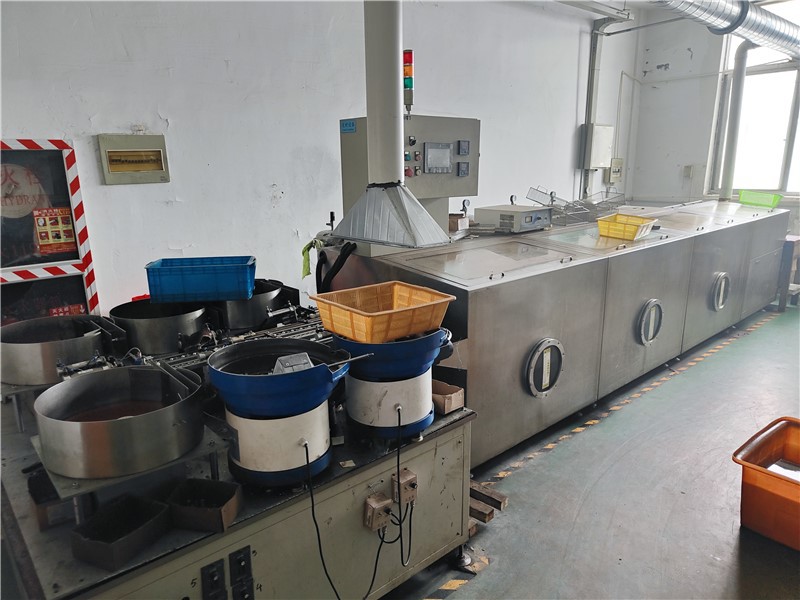
The company has a series of various processing equipment and testing equipment for the production of products that meet the international quality system certification. The raw materials required for the company's products come from professional metal material production plants that meet international standards.
productcate-1-1
productcate-1-1
productcate-1-1
FAQ

Q: Why is a snap ring option while mounting deep groove ball bearing provided?

A: The snap ring, fitted in an annular groove in the outer ring, facilitates axial location of the bearings within their housings. The integral sealing can significantly prolong bearing service life because it keeps lubricant in the bearings and contaminants out.

Q: How does a snap ring work?

A: A snap ring or retainer ring is a fastener that holds a bearing in an application in place. A portion of the retaining ring protrudes from the groove to create a shoulder to prevent components from migrating from their position during operation.

Q: Do snap rings prevent movement of shafts and bearings?

A: Securing Components: The primary function of snap rings in bearings is to secure essential components, such as outer races and shafts, in a specific position within the assembly. By preventing axial movement or shifting of parts, snap rings contribute significantly to the overall efficiency and longevity of bearings.

Q: What are the two types of snap rings?

A: Retaining Rings, Snap Rings & Circlips - External & Internal | MW
There are two main types of snap and retaining rings—Internal retaining rings, which are assembled inside a cylinder where the ring fits inside a hole (or bore), and external retaining rings, which are assembled on the outside of the shaft.

Q: Are snap rings internal or external?

A: External retaining rings, also known as snap rings and circlips, are designed to fit on the outside of a shaft. The lugs protrude outwardly to keep the internal diameter free of interference.

Q: What material is used for snap rings?

A: Many of these are available in stainless steel, Beryllium copper, bronze or carbon spring steel.

Q: Can snap rings be reused?

A: Retaining Rings
Can you re‑use retaining rings? Retaining rings manufactured from spring steel, or other materials with spring‑like qualities, can be reused as long as there is no visible wear or damage that compromises the integrity of the ring.

Q: What does a snap ring look like?

A: Although “ring” is slightly a misnomer, snap rings are actually C-shaped and not complete circles. The “snap” part of a snap ring does describe it perfectly, though, as snap rings have high tensile strength that allows it to snap into a groove and stay in place.

Q: What is the difference between a circlip and a snap ring?

A: The name snap ring generally refers to circlips that have the ends formed to aid installation and removal and are not formed from wire (i.e., do not have a round cross-section). These rings are designed to be installed and removed with special pliers.

Q: What is a snap ring in a bearing?

A: External Rings (Snap Rings) are used to prevent bearing motion when its mounted on a shaft and are available in plated or non-plated spring steel and stainless steel.

Q: What is the difference between internal and external snap rings?

A: Internal retaining-rings are ideal for applications where components need to be held within a cylindrical bore, preventing them from moving outward. External retaining-rings, on the other hand, are intended to be installed on the outside of a shaft.

Q: What causes a snap ring to break?

A: If the maximum allowable thrust load is exceeded, the ring can dish or compress the groove edge, causing deformation. The compromised groove wall allows for the ring to expand, twist, and ultimately pop out of the groove.

Q: How do you remove the inside of a snap ring?

A: I've got a small screwdriver I bent the blade on to get these things out. I use the "tool" to pry out one end then use another small screwdriver to "roll it out".

Q: Where are snap rings used?

A: Retaining rings — Also known as snap rings or circlips are metal fasteners installed into a groove on a shaft, or in a housing or bore to retain an assembly. The devices keep parts in place using a compact, lightweight design that requires fewer machining operations than other fastening techniques.

Q: Can I use e clip instead of snap ring?

A: We use e clips over snap rings because for snap rings you need to turn down the shaft to a circle. E clips don't require the circular shaft and can easily be pressed into the machined groove (no tool is needed).

Q: Can snap rings be internal or external?

A: Types of Retaining Rings:
External circlip rings have lug holes that extend beyond the circumference of the ring, whereas internal snap rings (also called housing rings) have lug holes within the circle. These holes are used in application with pliers designed for installation and removal of the parts.

Q: How does a snap ring work?

A: Also known as snap rings or snap clips, retaining rings are circular-shaped fasteners that are designed for use with shafts or bores. They essentially create a “shoulder” on the shaft or bore that holds the respective part in place. There are different styles of retaining rings, including tapered and untapered.

Q: Why is a snap ring option while mounting deep groove ball bearing provided?

A: Single and double row deep groove ball bearings. Snap rings, fitted to bearings with snap ring grooves, provide a simple means of location. Deep groove ball bearings have very limited ability to accommodate errors of alignment.

Q: Are snap rings directional?

A: Constant section rings/snap rings are installed in a horizontal direction into a groove in a housing or on a shaft. They don't require special tooling for installation and removal, although some constant section rings feature notches on the end of the ring to make installation easier.

Q: Are snap rings color coded?

A: Snap rings may also be color-coded according to their location, or need to be installed facing a certain direction. Some snap rings are concave and require the fingers of the snap ring to face a specific direction.

We're professional stainless steel non-standard bearings manufacturers and suppliers in China, specialized in providing high quality products. We warmly welcome you to wholesale customized stainless steel non-standard bearings at low price from our factory. Contact us for more cheap products.