
Cixi Jieduo Machinery Factory is a professional manufacturer of non-standard customized stainless steel bearings, integrating R&D and design. The company mainly produces various non-standard deep groove stainless steel bearings, stainless steel flange bearings, stainless steel double row cylindrical bearings, stainless steel medical equipment bearings, stainless steel food processing equipment bearings.
Why Choose Us
Our Products
The company mainly produces various non-standard deep groove stainless steel bearings, stainless steel flange bearings, stainless steel double row cylindrical bearings, stainless steel medical equipment bearings, stainless steel food processing equipment bearings.
Our Certificates
The company has passed the ISO9001:2015 international quality system certification. The company has a series of various processing equipment and testing equipment for the production of products that meet the international quality system certification.
Product Application
The company's products are widely used in equipment that requires corrosion resistance, high temperature resistance, and low temperature resistance.
Raw Materials
The raw materials required for the company's products come from professional metal material production plants that meet international standards.

The double row angular contact bearing is two single-row bearings arranged back-to-backThe Double Row series, angular contact bearings are designed to meet the demand for increased axial and radial rigidity in applications where space is limited. These bearings are used in equipment where heavy radial loads, combined radial and thrust loads, and two directional loads are encountered. The non-filling slot allows higher speed operation. In addition, the angle of contact converges outside the bearing, offering increased resistance to overturning moments. Bearings in this series are produced with shields (ZZ) or seals (2RS).These bearings are useful in agricultural machinery and pumps and used in applications including packaging equipment, conveying equipment, compressors, and elevators.
Advantages of Stainless Steel Double Row Bearings

Constructed of bearing steel and double rubber seals, it is durable enough to withstand harsh environments. The sealing system allows prevents entry of dirt, reduces wear, noise, vibration, and lubrication failure.These bearings have a low coefficient of friction and minimal rotational resistance, reducing energy loss and extending their service life.
Manufactured to very high precision standards, our bearings ensure smooth and efficient operation even under high loads.
Deep groove ball bearings for skateboard wheels, inline skates, skates, electric motors, small machinery are a versatile choice for any project.
Bearing steel has a strong wear capacity. This makes it ideal for exposure to harsh environments.
Application of Stainless Steel Double Row Bearings
Bearings have applications in all types of industries, though each individual bearing has its ideal uses. Common industrial applications of bearings include:
Aggregate, concrete, and mining. These sectors require bearings like transmission and conveyor bearings with a superior capacity for load and the ability to tolerate harsh conditions. They have applications in equipment like vibrating screens, tunnel borers, and bucket wheels.
Electric motor repair. Bearing types like deep groove or angular contact ball bearings and cylindrical roller bearings aid in electric motor repair. They’re often found in electric motors for the automotive, aerospace, industrial equipment, HVAC, and appliance industries. Ceramic hybrid bearings and electrical current grounding devices are increasingly being used to extend bearing life.
Machine tools. Machine tool bearings have applications in equipment such as machining centers, high-speed spindles, automated screw machines, and water jet equipment. These tools rely on bearings like angular contact bearings, ceramic hybrid spindle bearings, high-precision cylindrical roller bearings, and ball screw support bearings.
Marine spares. Options like craft split and split spherical bearings support optimal functionality in marine components like stern shafts, rope guards, sonar equipment, and hydraulic or electronic thrust metering machinery.
Material handling. Mast guide, cam follower, double row, and leaf chain bearings facilitate material handling applications. They’re commonly found within forklift trucks, conveyor systems, and heavy cranes.
Metal processing. Grooved and roller bearing varieties can assist in metal processing, supporting wire forming and metal recycling applications.
Packaging/food processing. Filling plants in the food and beverage processing sectors, for example, utilize options like slewing ring, crossed roller, and four-point contact bearings. Stainless steel bearings and solid-lube are available for increased service life.
Plastic processing and forming. Using roller, linear, and thrust ball bearings, among others, this industry facilitates machine part movement in ejector shafts, extrusion gearboxes, and injection, mold clamping, and press cylinders.
Power generation. Turbines, generators, compressors, pumps, drives, and more all use bearings to help generate power. The power generation market typically utilizes roller, ball, blade, radial, pillow block, and yaw bearing types.
Pulp, paper converting, and printing. Converting and printing processes use a wide range of bearings, including ball bearings, cylindrical and spherical roller bearings, linear bearings, one-way clutch bearings, and free running bearings. They facilitate smooth operations in rollers, slitters, rewinders, and more.
Pump, compressor, and oil field. Oil sectors require various ball and roller bearing varieties with high load capacities to operate pumps, compressors, and drives.
Recreation. Diverse recreational equipment such as go-karts, ski areas, inline skates, bowling pinsetting machines, and fishing reels make use of ball, roller, and ceramic bearings.
Robotics and automation. Automated machinery relies on super precision and linear motion bearings to ensure accurate and repeatable movements for robot arms, conveyor systems, AGVs, and more.
Transportation. The transportation industry uses bearings in automobile, railcar, and aircraft components like chassis, drive systems, brakes, and axles. Prime choices are ball bearings and cylindrical or taper roller bearings.
Wastewater treatment. Ceramic bearings are one variety with applications in wastewater treatment. Bearings for this sector are useful in valves, drives, pumps, flowmeters, and hydraulic machinery.
Wood products. In wood production applications, you might use bearings for log-processing operations or within finished cabinetry. Spherical roller bearings, radial ball bearings, and P53 bearings are good choices for this market.
How to Maintain Stainless Steel Double Row Bearings
Whether you’re a seasoned engineer or a DIY enthusiast, maintaining your bearings is crucial for optimal performance. Bearings play a vital role in mechanical systems, but over time, they can accumulate dirt, leading to decreased efficiency and potential failure. we’ll explore various cleaning methods and provide step-by-step instructions to help you keep your bearings in top condition.
The first thing you’ll need (besides dirty bearings) is to choose which product to use. Straight away when cleaning things you think of water. However, this can cause your bearings to rust pretty quickly, so as a rule when cleaning bearings stay away from water. Instead use adhesives or lubricants. There are a few choices though that are easy to come by. Many people use acetone when cleaning skateboard bearings as it can be found in nail polish remover, or they may use a rubbing alcohol over 90%.
Step 1 - Access The Bearings
Assessing the condition of bearings before diving into the cleaning bearings process is crucial to ensure optimal performance and longevity. Visually inspect for wear, discoloration, or rough surfaces, and rotate to check for resistance or unusual sensations. Examine for play or looseness which is an indication of wear or installation issues. By assessing bearings beforehand, you can determine cleaning needs and address underlying issues for peak functionality.
Step 2 - Pop The Seals
The second step when cleaning bearings is to pop the seals. There are two kinds of seals you may come across: Rubber seals and metal shields. Both can be easily removed by using a small screwdriver. Slide the end of the pin, or whatever you chose to use, around the edge of the seal until it slides under and you can pop off the top. When the seal is removed you should be able to see small balls inside the bearing. One thing to mention is, if you have metal shields, they are held in place by a circlip so be careful when finding the edge of the seal.
Step 3 - Clean The Bearings
The next step involves the actual cleaning of the bearings. Take your cleaner and fill a bowl (depending on the size of your bearings) with enough liquid to fully submerge each bearing. Place your bearings flat with the balls facing down and leave them to stand for a few minutes.
Once you have let them soak for a while, take one bearing and tap it against the base of the bowl, again face down. This will help to dislodge any grit and dirt that may have made its way into the bearing. Repeat this action with all of the bearings. If you think there is still some grit inside the bearings, hold it between your thumb and forefinger and spin it with your other hand.
Step 4 - Dry The Bearings
This is a critical part when considering how to clean bearings. When you are happy they are clean, remove the bearings from the cleaning solution and place them on a towel or cloth and leave them to dry with the balls facing down. You can spin them again if you want them to dry faster.
Step 5 - Clean The Seals
The next step when cleaning bearings involves making sure the seals have been thoroughly cleaned. While the bearings dry you need to clean the seals you removed at the start. This is much easier as you can rinse them in the solution until clean. Then leave them to dry with the bearings.
Step 6 - Pop The Seals
The next step for cleaning bearings involves lubricating them. Once the bearings are completely dry lubricant should be applied.
It is important to apply enough to coat all of the balls but not so that it is too packed inside the bearing. Take the lubricant on the end of your finger and rub it into the bearing. Make sure you can feel the balls rolling around inside the bearing and that they are completely covered.
Our Factory
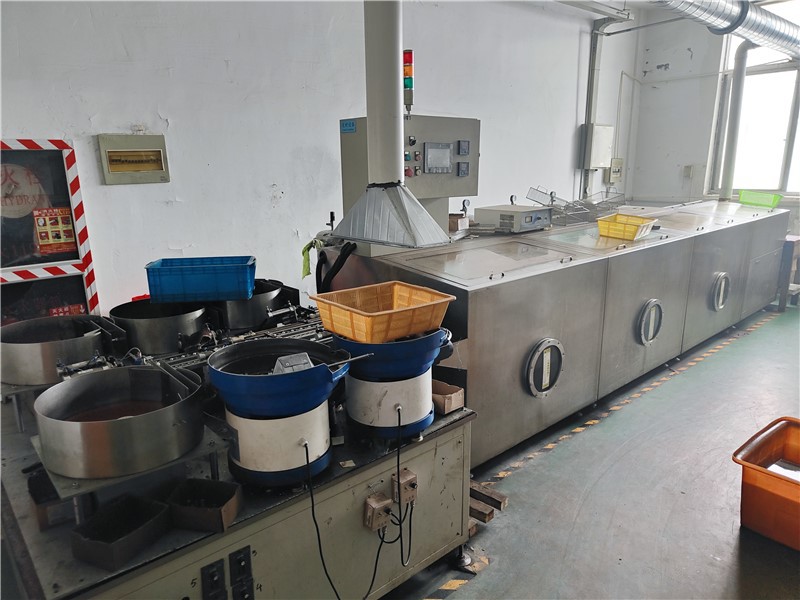
The company has a series of various processing equipment and testing equipment for the production of products that meet the international quality system certification. The raw materials required for the company's products come from professional metal material production plants that meet international standards.